



28 Apr Elephants vs Marulas: The Battle Reshaping Kruger National Park
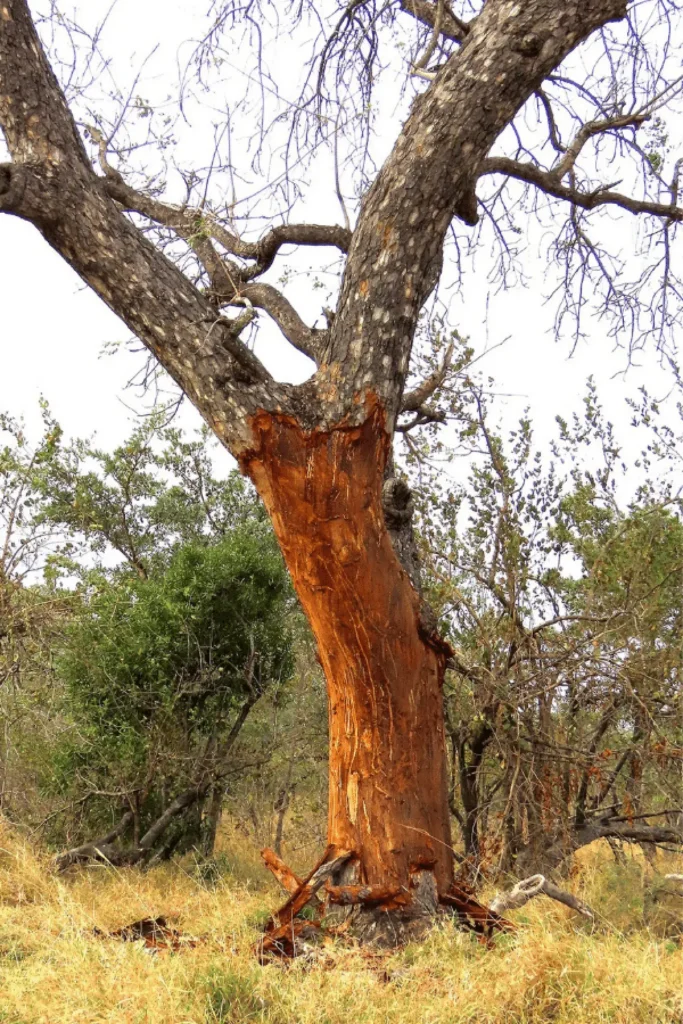
For many visitors to the Kruger National Park (KNP), the sight of toppled or debarked marula or knobthorn trees that have been killed by elephants is a sign of irreparable destruction. For others, it is merely an indication of natural change.
The huge (and hungry!) animals – a large bull elephant can consume more than 150 kg of vegetation in a day – also push over other tree species, break branches, dig up roots and leave a highly visible trail wherever they go. The destruction of trees, particularly the larger specimens, is a matter of concern for many people. This topic often provokes an emotional debate about whether there are too many elephants and how their numbers should be reduced.
Not everyone agrees with reducing elephant numbers though. Scientist point out that the death of trees and shrubs has ecological benefits including creating openings for grass and other vegetation to develop, broadening biodiversity. A fallen tree also helps form a barrier against which seeds gather and germinate and provides shelter for a wide variety of small animals forming part of the complex mosaic of life in the bush.
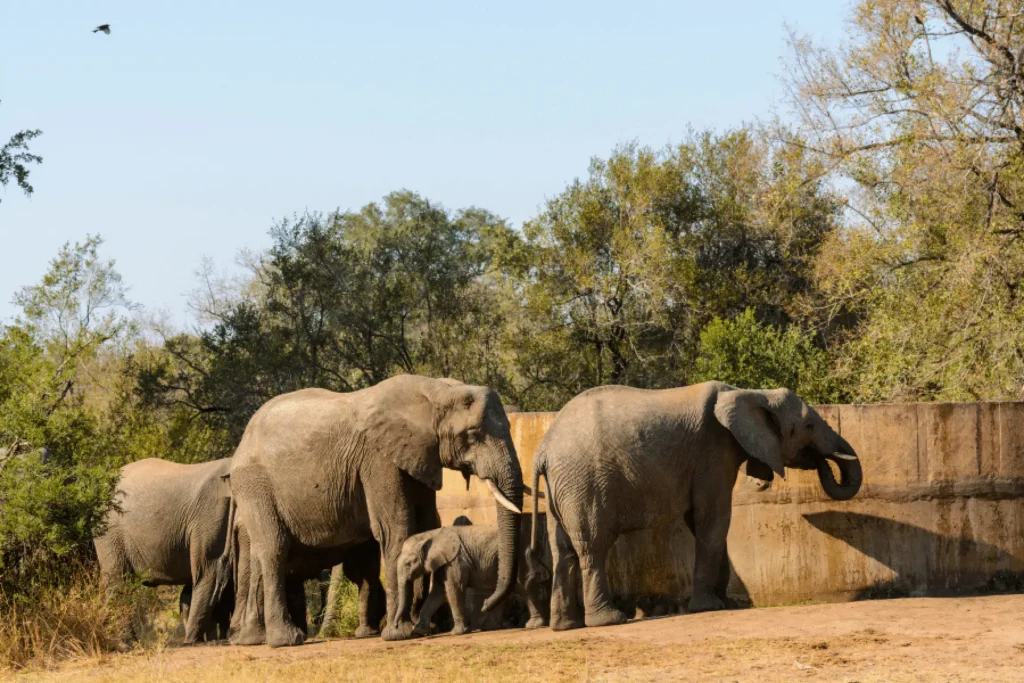
Beyond the obvious ecological benefits of large trees, these towering giants are aesthetically pleasing. Marulas, knobthorns, and plenty of other trees help to create the fundamental sense of place and nature which visitors to protected areas like KNP often seek.
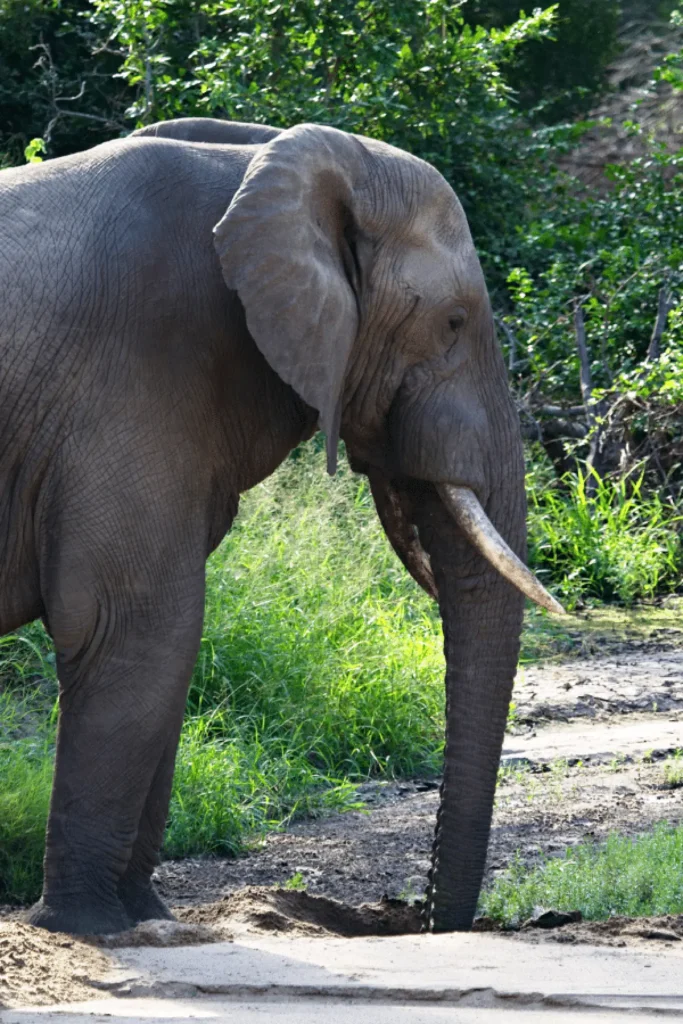
Bull elephants sometimes use their immense strength to topple large trees to get at succulent shoots and, in the case of the marula, to feed on juicy fruit which ripens in mid-summer. The animals also use their tusks to strip bark – an important part of their diet – from the trees. This action can sometimes expose the heartwood of the trees and causes them to die.
Some scientists and KNP managers argue that elephant populations need to be reduced to protect big trees, and the many other species of animals, birds and insects dependent on them for food and nesting sites. Others argue that, at least in Kruger, the habitat is resilient enough to cope with the loss and that ecosystems are always in a state of flux. Even scientists who have worked together for years researching how ecosystems function struggle to agree on how best to manage the impact of elephants on the environment.
Senior South African National Parks (SANParks) ecologist Dr Sam Ferrera and fellow ecologist Dr Dave Balfour, recently wrote about this debate in the South African publication Daily Maverick:
Underlying the debate is a deeper question: what are we managing for? Earlier generations aimed for scenic stability: open grasslands, scattered trees, predictable structure... Contemporary conservation increasingly prioritises maintaining ecological processes and resilience, even if landscapes look messier and less postcard-perfect. In that framing, elephants are not simply tree destroyers but ecosystem engineers that create habitat mosaics and influence nutrient cycles.
Their article was written in response to Professor Eugene Moll, a renowned botanist, who wrote (also in the Daily Maverick) that in some areas, and particularly KNP, reducing elephant numbers is essential if marulas trees are to thrive:
Marulas are among the most iconic, ecologically valuable trees in the park. They anchor savanna systems, feed birds and mammals, shape animal movement and define the character of large areas of Kruger. And yet, within my lifetime, their numbers have collapsed... By allowing elephant and herbivore numbers to remain at current levels in a fenced system, we are choosing elephants over marulas. We are choosing short-term comfort over long-term ecological integrity.
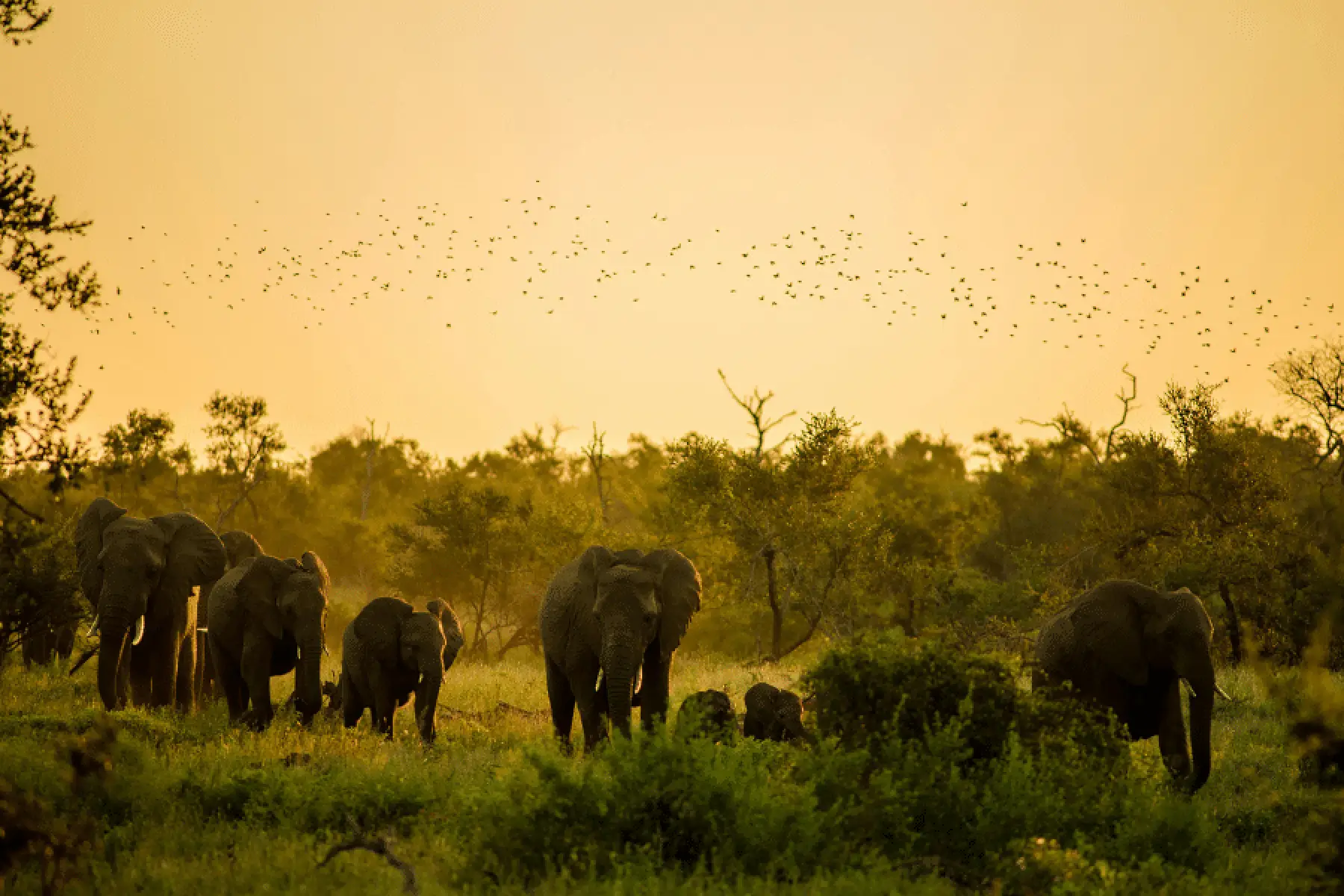
The management of elephants has been the subject of a long running debate, and the government is expected to publish the National Elephant Heritage Strategy later this year. Unlike in many parts of Africa, the elephant population in South Africa is growing rapidly but managers and scientists must consider that some reserves are far smaller than the 20 000 sq. km KNP, and different issues must be addressed.
There is no simple strategy which can be applied. There is limited space to which elephants can be moved. South Africa’s human population has increased two and a half times from 25 million to about 65 million over the past 50 years, and managers in most protected areas argue they cannot take on new elephant populations.
In Kruger, a lot of artificial waterpoints have been closed. This has slowed down the overall growth of the elephant population but in many private reserves on the western boundary of the park a high density of waterholes has, conversely, attracted the animals.
Between the mid-1960s and 1990s thousands of elephants were killed in KNP as authorities believed the population should not be allowed to grow beyond 7 000 – 8 000. This policy was later abandoned as it was not supported by modern scientific research and it was widely considered to be cruel.
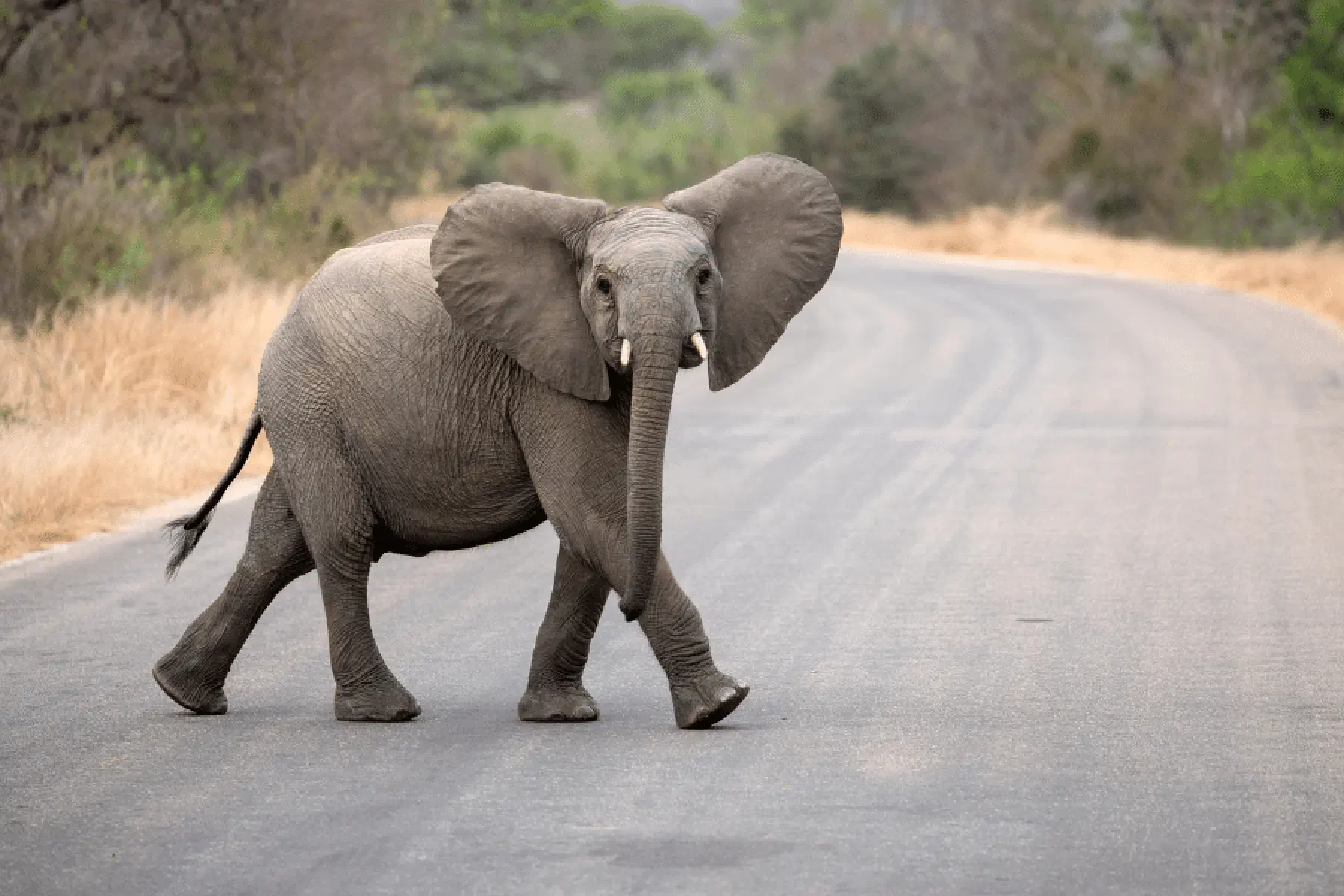
The elephant population debate will come to the fore again once the government publishes the National Elephant Heritage Strategy. In their previously mentioned Daily Maverick article, Ferreira and Balfour summarise well the challenge everyone who cares about wildlife and environmental conservation is currently facing:
Big trees are important – ecologically, culturally, aesthetically. Elephants, too, are animals that inspire powerful emotions. People are right to care deeply about both. But caring deeply does not relieve us of the responsibility to think clearly.