


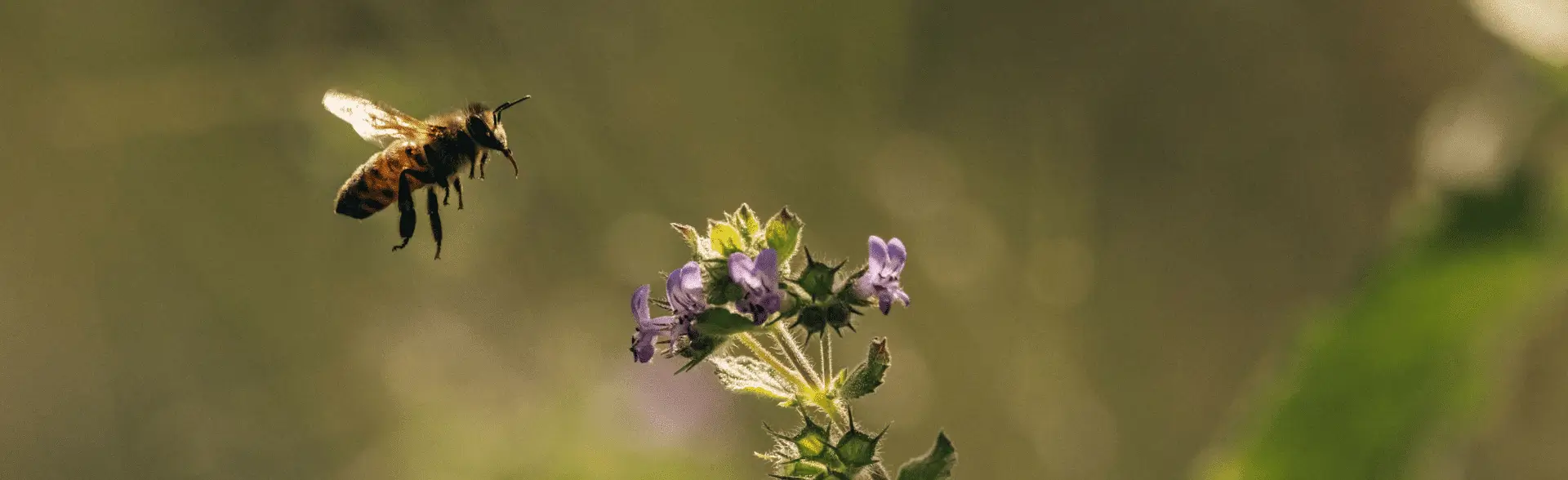
07 Aug More Than Honey: The Hidden World of Southern Africa’s Bees
Mention “bees” and most people picture one insect: the Western honey bee, prized the world over as a pollinator of the crops we depend on, and as the maker of honey (though also given a wide berth for its sting).
Found on every continent except Antarctica, the honey bee’s fame is well earned.
But it’s also a little misleading. That single, familiar species overshadows more than 21 000 other named bees worldwide ‒ a number entomologists are quick to point out is still incomplete, with new species awaiting description.

A Bushveld of Bees
Southern Africa alone is home to over 1 200 species, only a handful of which most of us could name. Not every bee pollinates plants, but each plays a role in its own environmental niche, with many still poorly understood by science. And nearly all of them, when you look closely, lead surprisingly complex lives.
Their common names often give the game away:
- Carpenter bees drill centimetre-wide tunnels through wood with their powerful mouthparts, raising their young inside the cavity.
- Cuckoo bees, true to their avian namesake, are brood parasites, sneaking their eggs into other bees’ nests, where the hatched larvae kill the host’s young and help themselves to the stored food.
- Leaf-cutter bees snip neat pieces from leaves and other vegetation to line their nests.
- Mason bees build with mud and sand instead.
Then there’s the tiny, stingless mopane bee (sometimes called the mopane fly), best known for its habit of clustering irritatingly around eyes and noses in search of moisture. Named for its association with the hot mopane-tree country it favours, it’s also prized for producing a rich, dark, strongly flavoured honey.
Honey Hunters and Honeyguide Birds
In remote parts of the African bush, honey remains a valued and hard-won resource. Honey hunters have long relied on an unlikely ally: the Greater Honeyguide. This bird leads people to wild hives with an insistent, chattering call, guiding them in until the nest is found.
Tradition across much of Africa holds that hunters must leave behind some comb and larvae for the bird once the hive is opened. Fail to pay this due, the story goes, and the honeyguide will take its revenge next time, leading the hunter not to honey, but to a snake or dangerous animal in the bush.
The Elephants Who Really Don’t Like Bees
The old claim that elephants fear bees is often waved off as myth, but there’s more truth to it than the folklore suggests: researchers have found the pachyderms dislike the sound of bees rather than the insects themselves. That insight has been put to practical use in Zambia, Zimbabwe, Kenya and beyond, where beehive fences are now strung along the edges of rural croplands to deter elephants from raiding fields. Many communities report a real drop in crop losses as a result.
Predators of the Hive
Bees have their own list of threats. Ants will raid eggs and larvae, while birds such as bee-eaters and drongos hunt the bees themselves. Honey badgers are also known to break into hives, though it’s the protein-rich larvae in the comb they’re after, not the honey.
References
Lloyd-Jones, D.J., Muamedi, M. & Spottiswoode, C.N. “To Bees or Not to Bees: Greater Honeyguides Sometimes Guide Humans to Animals Other Than Bees, but Likely Not as Punishment.”